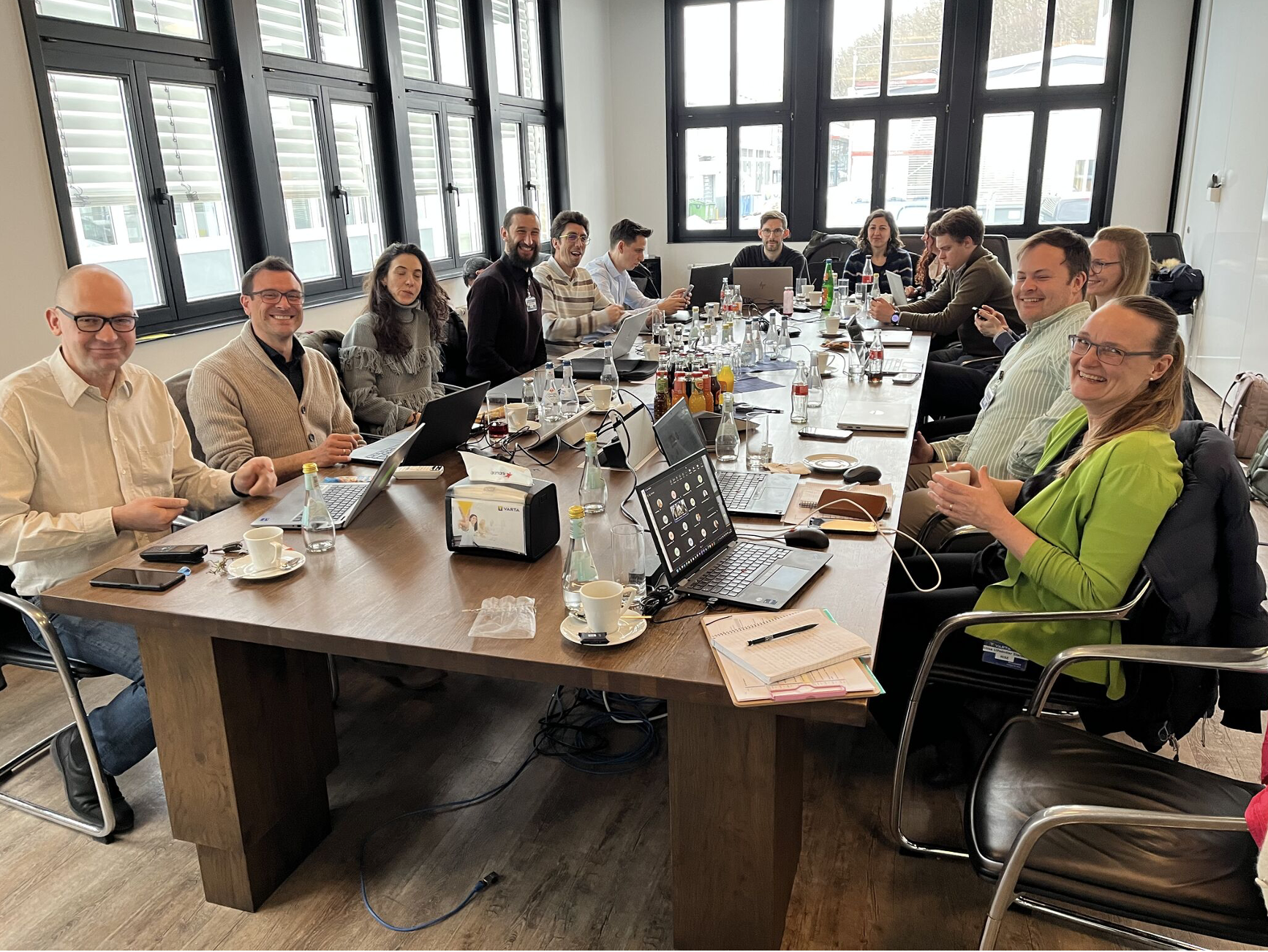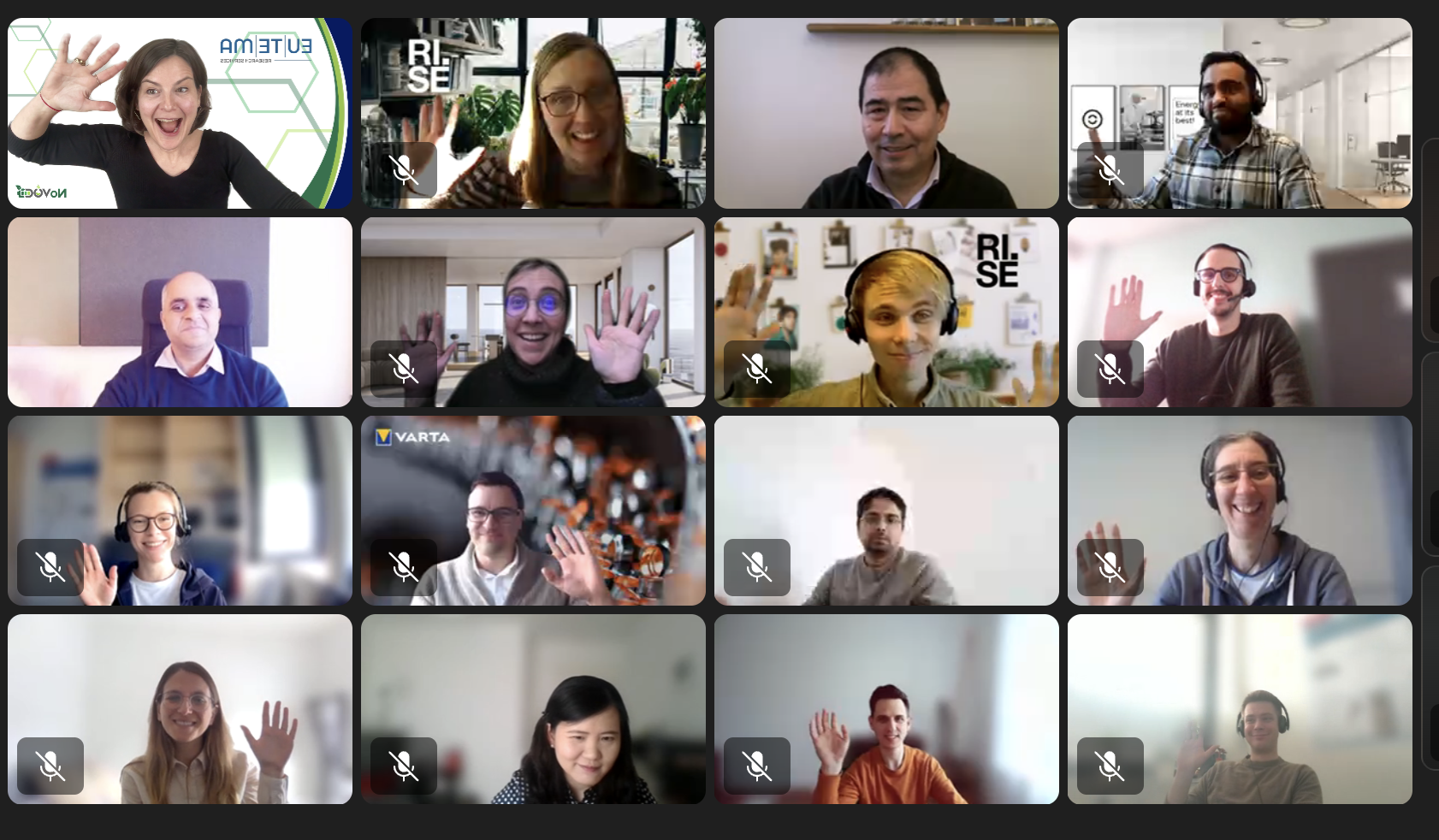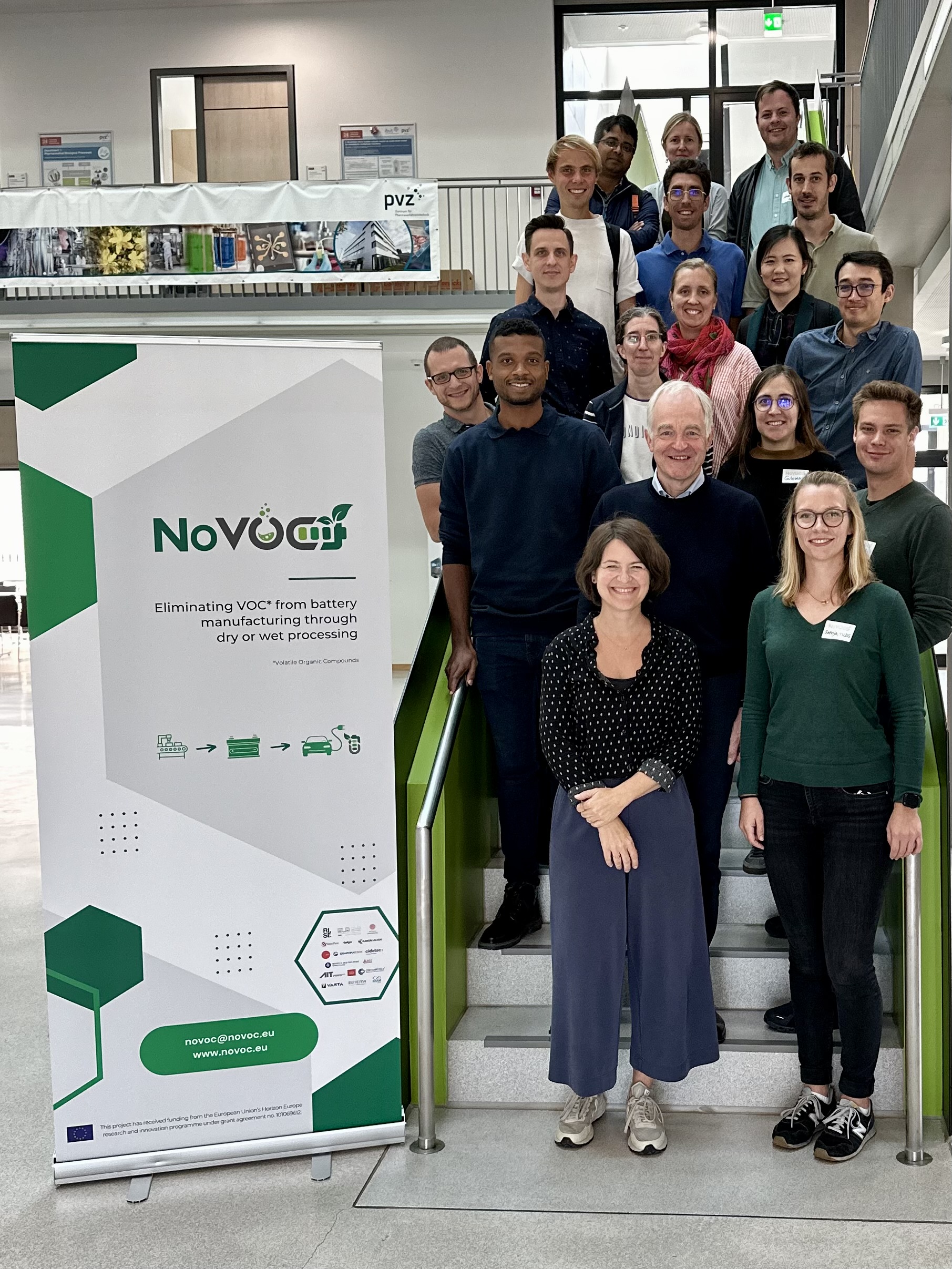
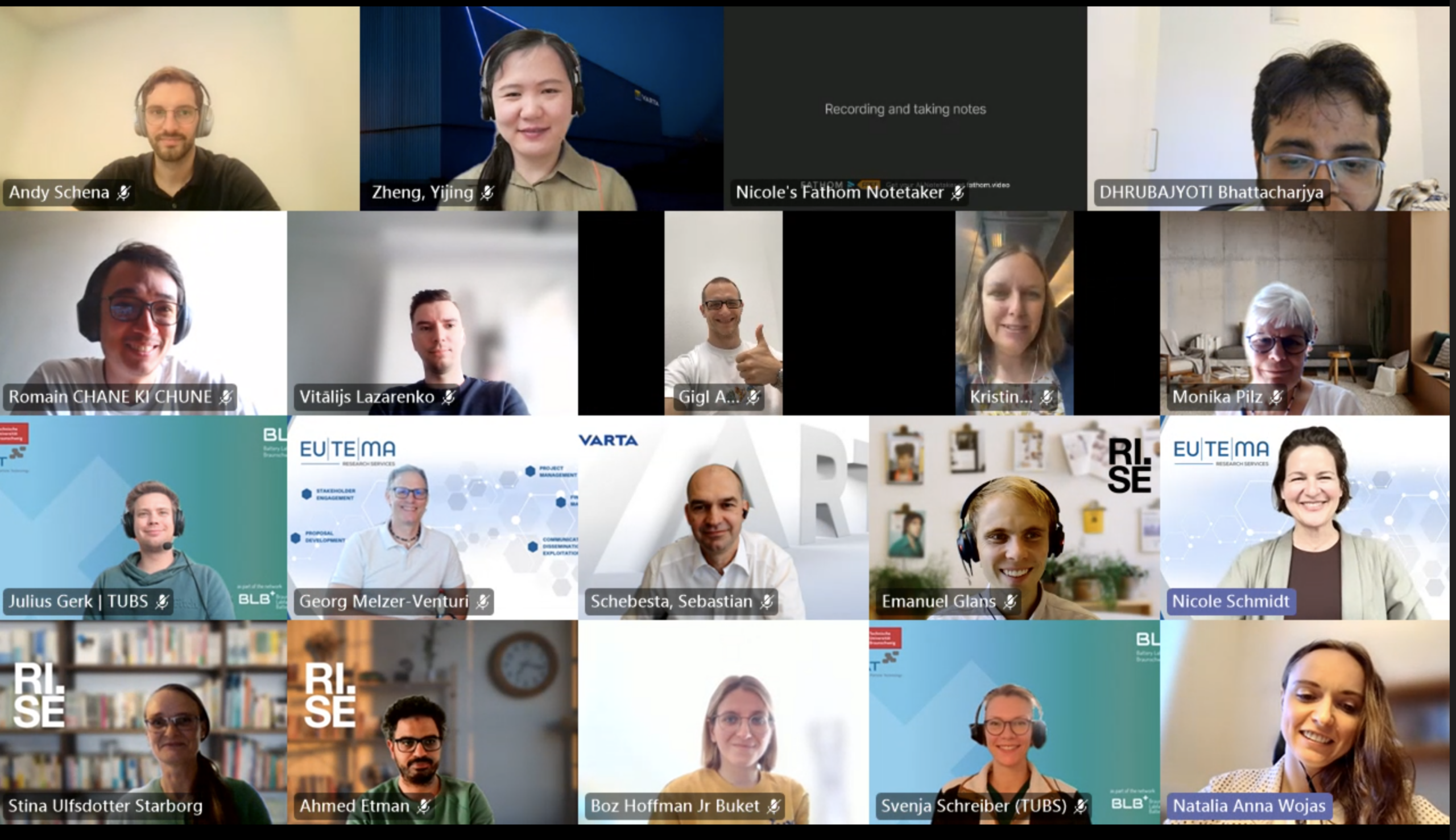
The NoVOC team met for what was most likely the semi-final virtual meeting
The NoVOC project has reached an exciting stage. During our consortium's latest General Assembly meeting, partners from across Europe came together to review progress, discuss remaining challenges, and prepare for the final months of the project in a virtual setting.
Turning Sustainable Manufacturing Concepts into Reality
Over the past years, NoVOC has been developing new ways of manufacturing lithium-ion batteries without relying on harmful volatile organic compounds (VOCs). The project focuses on both aqueous and dry electrode manufacturing processes that have the potential to reduce energy consumption, lower costs, and improve the environmental footprint of battery production.
At the latest meeting, partners reported significant progress in scaling up these manufacturing approaches. Electrode materials have now been produced, processed, and delivered for cell assembly. Several partners are already manufacturing pouch and cylindrical battery cells using the materials developed within the project.
This marks an important transition. Rather than studying individual process steps in isolation, the consortium is now validating how these innovations perform in complete battery cells.
Digital Tools Supporting Smarter Manufacturing
Another area of progress is digitalisation. NoVOC partners have been developing data-driven models and artificial intelligence tools that can help manufacturers better understand and optimise battery production processes.
The goal is straightforward: identify potential quality issues earlier, reduce waste, and support more efficient manufacturing. By combining process data, material characteristics, and machine learning approaches, the project is exploring how future battery factories could become more intelligent and resource-efficient.
While this work is still ongoing, the results so far demonstrate the growing role that digital technologies will play in Europe's future battery industry.
Collaboration Remains the Key Ingredient
Beyond the technical achievements, the meeting also highlighted something equally important: our genuinely enjoyable collaboration.
Developing sustainable battery manufacturing technologies requires expertise from materials scientists, equipment manufacturers, battery producers, digitalisation experts, recyclers, and testing laboratories. NoVOC brings together all of these perspectives within a single European consortium.
As the project enters its final phase, partners are now coordinating cell testing, safety assessments, recycling studies, and exploitation activities to ensure that the knowledge generated can support future industrial implementation.
The coming months will focus on validating the manufactured cells, analysing the results, and sharing the lessons learned with the wider battery community.